
26.10.2026
What is a heatsink? Understanding a CPU cooler’s heat path
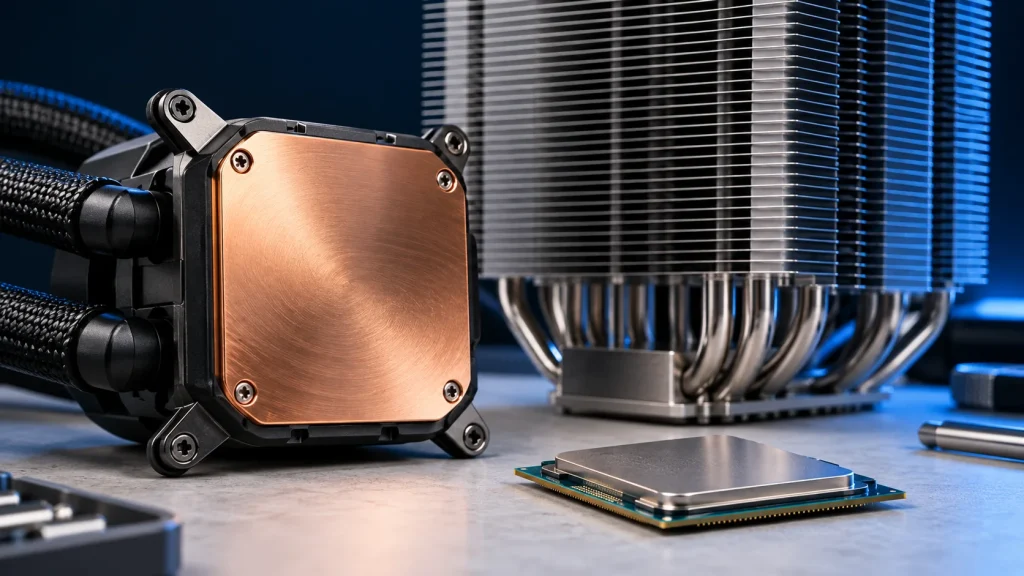
Heatsink, heatpipe and fan describe different parts of a cooling assembly. Knowing the distinction makes specifications easier to read and helps you ask useful questions before choosing components.
A heatsink is not a fan
A heatsink receives and spreads heat, typically using metal fins to increase contact with air. A fan supports airflow through it. A spinning fan alone does not prove that the full thermal path is working correctly.
Follow the whole path
For a common tower design, think of the CPU, contact interface, cooler base, heatpipes and fin stack as successive stages. Each needs to work as designed. Use the mounting kit and installation procedure specified for the exact cooler.
Record useful specifications
Include overall dimensions, supported sockets, RAM clearance, fan connector and supplied accessories in the build sheet. Heatpipe count and fan size describe a design; they are not a universal performance score across manufacturers.
Investigate changes methodically
If temperatures change unexpectedly after reassembly, review installation and connections before assuming a larger cooler is needed. Ask a technician to check the model’s instructions if you are unfamiliar with hardware work. Keep the model name and a description of the workload available for support.
Technical references: Intel: how a CPU cooler works.