
26.10.2026
What is an AIO cooler? Components and everyday use
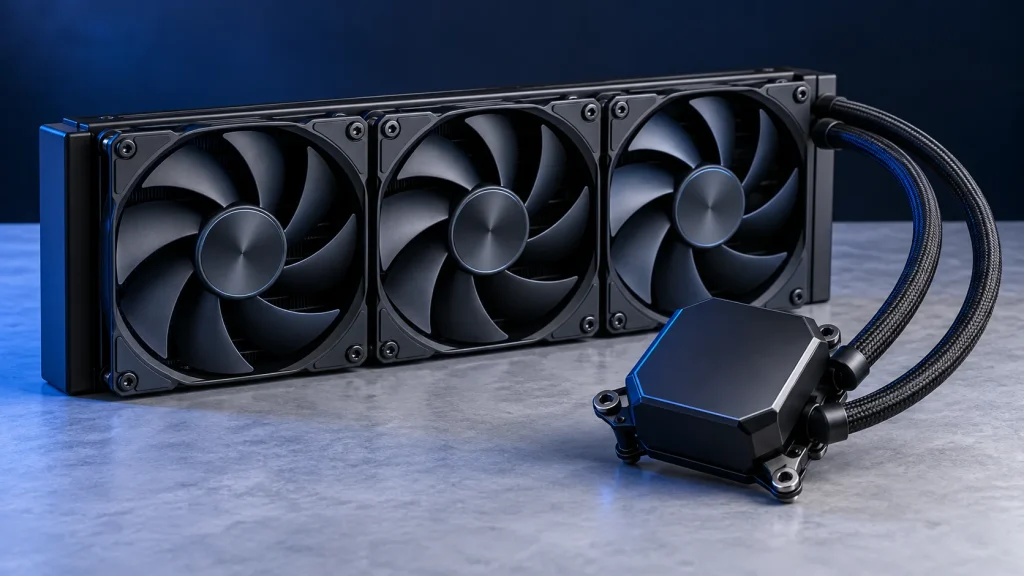
An AIO is a liquid-cooling assembly supplied as a connected system. Understanding its parts helps you read specifications, discuss a build with a technician and follow the correct operating instructions.
The main components
The block’s contact surface receives CPU heat. A pump circulates coolant through tubing and a radiator, whose fans support heat exchange with air. Pump placement varies, so do not assume every CPU-mounted block contains one.
Understanding radiator size
Names such as 240 or 360 identify size classes, but installation requires the model’s actual dimensions. Design, operating speeds and case conditions also affect results. Radiator length alone cannot predict a fixed CPU temperature.
Use the specified controls
Read the manufacturer’s power, pump and fan setup instructions. Do not copy settings from an unrelated cooler. If monitoring software is supplied, distinguish CPU temperature from coolant temperature rather than treating them as the same measurement.
Cleaning and observation
Keep fans, radiator surfaces and dust filters clear following the cleaning instructions. Do not open a sealed loop that is not intended for user refilling. Record persistent unusual noise or unexpected temperature changes and contact technical support.
Is an AIO essential for gaming?
No. Select cooling around the CPU, workload, case and noise requirements. Include your complete build and the cooler model when asking Thai Binh to help check the specifications.
Technical references: darkFlash: liquid-cooling components · Noctua: cooling requirements and compatibility.